
Walk-In Shower vs Bath
Which Is Better for Your Bathroom?
- Written By Jason Fisher
- 25th May 2026
- 6 min read
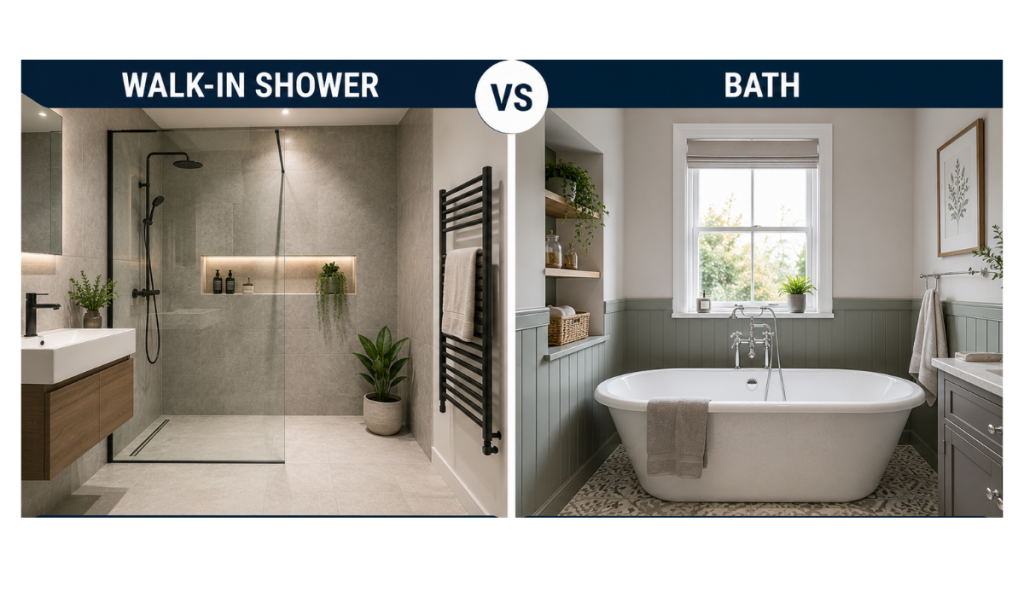
If you’re planning a bathroom renovation, one of the biggest decisions you’ll make is whether to install a walk-in shower or keep a traditional bath.
Both options can completely change how your bathroom looks and functions, but they differ quite a bit in terms of:
- cost
- practicality
- maintenance
- appearance
- accessibility
- long-term value
The right choice really depends on your lifestyle, the size of your bathroom, and who will be using it day to day.
Here’s a realistic breakdown of how the two compare.
What is a walk-in shower?
A walk-in shower is an open or partially enclosed shower area designed for easy access and a more modern appearance.
Most walk-in shower systems include:
- frameless glass screens
- low-profile shower trays
- tiled wet areas
- minimalist fittings
Walk-in showers have become increasingly popular in modern UK bathroom renovations, especially in smaller homes and contemporary properties.
What is a traditional bath?
A traditional bath is the more classic bathroom option and usually includes:
- fitted baths
- freestanding baths
- shower-over-bath combinations
Baths remain extremely popular because they provide:
- versatility
- family practicality
- relaxation
especially in homes with children.
Many homeowners still prefer baths because they create a more traditional and comfortable bathroom feel.
Cost comparison
One of the biggest differences between the two is installation cost.
Bath installation costs
Typical UK bath installation costs:
- Standard fitted bath: £800–£2,000+
- Freestanding bath installation: £2,000–£5,000+
Costs depend heavily on:
- plumbing changes
- tiling
- bath quality
- layout adjustments
Basic bath replacements are usually cheaper than full walk-in shower conversions.
Walk-in shower costs
Walk-in shower installation usually costs:
- £2,500–£8,000+
Premium walk-in shower projects can cost significantly more depending on:
- tiling
- drainage systems
- glass screens
- underfloor heating
- waterproofing requirements
Wet room style installations often involve more labour and preparation work.
Maintenance differences
Walk-in shower maintenance
Walk-in showers generally require:
- regular glass cleaning
- grout maintenance
- drainage cleaning
However, there’s usually:
- less bulky hardware
- fewer awkward corners
- easier day-to-day cleaning
compared to traditional bath setups.
Modern shower panels and large-format tiles can also reduce grout lines and simplify maintenance.
Bath maintenance
Baths are relatively straightforward to maintain but can require:
- silicone replacement
- panel repairs
- regular cleaning around edges
Shower-over-bath combinations can also develop:
- mould
- seal deterioration
- water staining
over time if ventilation is poor.
Freestanding baths can sometimes make cleaning around the edges more difficult depending on the layout.
Lifespan and durability
Walk-in shower lifespan
A properly installed walk-in shower can often last:
- 15–25 years or more
depending on:
- waterproofing quality
- drainage installation
- tiling materials
- ventilation
High-quality shower systems are designed to resist:
- leaks
- moisture damage
- mould problems
when installed correctly.
Bath lifespan
Most baths can also last:
- 15–25 years or longer
depending on:
- material quality
- usage
- installation standards
Acrylic baths are the most common and affordable, while:
- steel
- stone resin
- cast iron baths
usually offer longer durability.
Poor installation can lead to:
- leaks
- movement
- damaged seals
regardless of bath type.
Appearance and style
This is often where opinions are divided.
Bath appearance
Many homeowners still feel baths look:
- more luxurious
- more relaxing
- more traditional
Freestanding baths in particular are often used as statement features in modern bathroom designs.
Baths tend to work especially well in:
- family homes
- period properties
- larger bathrooms
where space allows.
Walk-in shower appearance
Walk-in showers are usually chosen for their:
- clean lines
- minimalist appearance
- modern design
They’re especially popular in:
- contemporary homes
- smaller bathrooms
- modern extensions
because they can make bathrooms feel:
- larger
- brighter
- more open
Frameless glass and large tiles can create a very premium appearance.
Accessibility and practicality
This is one of the biggest deciding factors for many homeowners.
Walk-in showers
Walk-in showers are often preferred because they:
- improve accessibility
- reduce trip hazards
- are easier for older homeowners to use
They’re particularly popular for:
- ageing-in-place renovations
- mobility-friendly bathrooms
- family convenience
Low-profile trays and wet rooms also improve accessibility significantly.
Baths
Baths remain practical for:
- young children
- relaxing
- homes with only one bathroom
Many buyers still expect at least one bath in family homes.
Removing the only bath in a property can sometimes affect resale appeal for families with children.
Environmental impact
This depends largely on water usage habits.
Walk-in showers
Showers generally use:
- less water
- less energy
than full baths, especially with efficient shower systems.
This can help reduce:
- water bills
- energy usage
over time.
Baths
Baths typically require:
- significantly more water
per use.
However, efficient modern baths and responsible water use can reduce environmental impact.
Material choices also affect sustainability depending on:
- manufacturing
- lifespan
- recyclability
Which option adds more value?
Both options can improve:
- bathroom usability
- property appeal
- modernisation
Walk-in showers are often viewed as:
- modern
- premium
- space efficient
while baths appeal strongly to:
- families
- traditional buyers
- homeowners prioritising relaxation
In reality, the best solution often depends on the size and layout of the bathroom.
Many homeowners now choose:
- a walk-in shower in en-suites
- a bath in the main family bathroom
to get the best of both.
Which is better for families?
Walk-in showers are often preferred by:
- busy households
- older homeowners
- smaller homes
because they’re:
- quicker to use
- easier to access
- simpler to maintain
Baths remain popular for:
- young children
- family homes
- relaxation
especially where there’s enough space for both options.
Final verdict
There isn’t a universal “best” option — it depends on your priorities.
Walk-in showers are usually better if:
- you want a modern appearance
- you have a smaller bathroom
- accessibility matters
- you want easier cleaning and maintenance
Baths are usually better if:
- you have children
- you enjoy relaxing baths
- you have a larger bathroom
- you want traditional family appeal
In This Article

Find Vetted Local Decking Installers Near you.👉