
Resin driveways vs block paving
Which Is Better for Your Driveway?
- Written By Jason Fisher
- 25th May 2026
- 6 min read
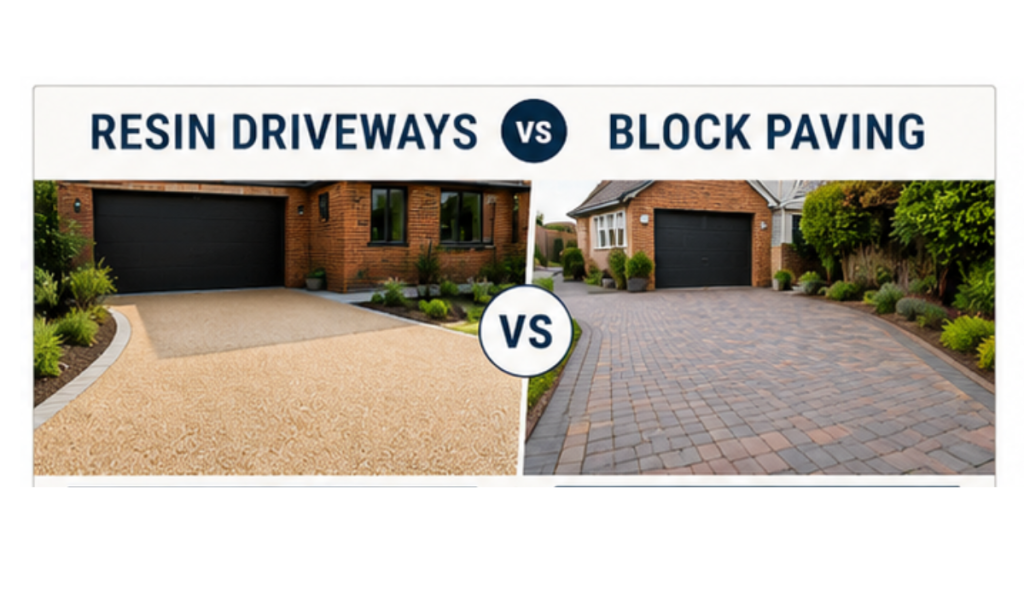
If you’re planning a new driveway, one of the biggest decisions you’ll make is whether to choose a resin driveway or traditional block paving.
Both options can completely transform the front of a property, but they differ quite a bit in terms of:
- cost
- maintenance
- lifespan
- appearance
- installation
- long-term value
The right choice really depends on your budget, the style of property you have, and how much maintenance you’re willing to do over time.
Here’s a realistic breakdown of how the two compare.
What is a resin driveway?
Block paving is the more traditional driveway option and uses individual paving blocks laid in various patterns.
The blocks are usually made from:
- concrete
- clay
- natural stone
Block paving remains extremely popular because it offers:
- a traditional appearance
- flexibility in design
- easier repair options
especially for family homes and older properties.
What is block paving?
Composite decking is made using a blend of recycled plastic and wood fibres. It’s designed to mimic the appearance of timber while reducing many of the maintenance issues that come with traditional wood decking.
Most composite boards are manufactured with:
- anti-slip finishes
- UV protection
- hidden fixings
- weather resistance
It has become increasingly popular in modern UK gardens, especially for homeowners wanting a low-maintenance outdoor space.
Cost comparison
One of the biggest differences between the two is installation cost.
Block paving costs
Typical UK block paving installation costs:
- Standard block paving: £80–£140 per m²
- Premium block paving: £150–£250+ per m²
Costs depend heavily on:
- groundwork
- edging
- drainage
- pattern complexity
Block paving can become expensive on larger driveways because installation is labour intensive.
Resin driveway costs
Resin driveway installation usually costs:
- £100–£180+ per m²
The material itself is often more expensive upfront than standard block paving, but installation can sometimes be quicker depending on the size and condition of the existing surface.
High-quality resin systems generally cost more but provide better durability and UV stability.
Maintenance differences
This is where resin driveways usually perform very well.
Resin driveway maintenance
Resin surfaces generally require:
- occasional pressure washing
- sweeping
- very little ongoing maintenance
There’s usually:
- less weed growth
- less moss build-up
- fewer loose materials
compared to traditional paving systems.
This makes resin especially popular with homeowners wanting a cleaner, lower-maintenance driveway.
Block paving maintenance
Block paving requires more regular upkeep over time.
Most block paved driveways need:
- occasional re-sanding
- weed removal
- moss treatment
- pressure washing
usually every year or two.
Without maintenance, block paving can:
- develop weeds between joints
- sink in certain areas
- fade over time
- suffer movement from heavy vehicles
especially if the groundwork wasn’t installed properly.
Lifespan and durability
Resin driveway lifespan
A good quality resin driveway can often last:
- 15–25 years or more
depending on:
- installation quality
- traffic levels
- UV exposure
- drainage conditions
Modern UV-stable resin systems are designed to resist:
- cracking
- fading
- loose stones
when installed correctly.
Block paving lifespan
Block paving can also last:
- 20–30 years or more
with proper installation and maintenance.
One major advantage of block paving is that damaged sections can often be repaired individually without replacing the entire driveway.
However, poor installation can quickly lead to:
- sinking
- movement
- drainage issues
particularly on driveways with heavy use.
Appearance and style
This is often where homeowners are divided.
Block paving appearance
Many homeowners prefer block paving because it looks:
- traditional
- established
- versatile
There are also many:
- colours
- laying patterns
- edging styles
available.
Block paving often suits:
- period homes
- traditional properties
- larger driveways
very well.
Resin driveway appearance
Resin driveways are usually chosen for their:
- smooth finish
- modern appearance
- seamless design
They’re available in:
- multiple stone blends
- modern colours
- decorative finishes
Resin often works especially well with:
- modern homes
- extensions
- contemporary landscaping
and creates a cleaner overall look.
Drainage and permeability
Drainage is increasingly important for UK driveways.
Resin driveways
Most resin-bound systems are:
- permeable
- SUDS compliant
meaning water drains through the surface naturally.
This can help reduce standing water and drainage problems.
Block paving
Block paving can also be permeable if installed correctly with proper sub-base preparation and drainage systems.
However, older installations sometimes struggle with:
- drainage
- weed growth
- water pooling
over time.
Environmental impact
This depends heavily on the materials used and installation methods.
Resin driveways
Many resin systems use:
- natural aggregates
- permeable surfaces
which can improve water drainage.
However, they still contain resin-based materials derived from chemicals.
Block paving
Block paving can be environmentally friendly depending on:
- manufacturing methods
- permeability
- material choice
Individual blocks are also easier to replace rather than resurfacing the entire area.
Which option adds more value?
Both options can improve:
- kerb appeal
- parking usability
- property appearance
Resin driveways are often viewed as:
- modern
- premium
- low maintenance
while block paving appeals to buyers who prefer:
- traditional finishes
- decorative patterns
- repair flexibility
In reality, installation quality matters more than the surface type itself.
A poorly installed driveway — regardless of material — can quickly develop problems and reduce overall appearance.
Which is better for families?
Resin driveways are often preferred by families because:
- they’re smoother underfoot
- easier to clean
- lower maintenance
Block paving remains popular for:
- larger family driveways
- multi-car properties
- homes wanting a more traditional finish
Final verdict
There isn’t a universal “best” option — it depends on your priorities.
Resin driveways are usually better if:
- you want low maintenance
- you prefer a modern appearance
- you want better drainage
- you like a smooth seamless finish
Block paving is usually better if:
- you prefer a traditional appearance
- you want easier repair options
- you like decorative patterns
- you don’t mind occasional maintenance
In This Article

Find Vetted Local Decking Installers Near you.👉