
Porcelain Patio vs Natural Stone
Which Is Better for Your Garden?
- Written By Jason Fisher
- 25th May 2026
- 6 min read
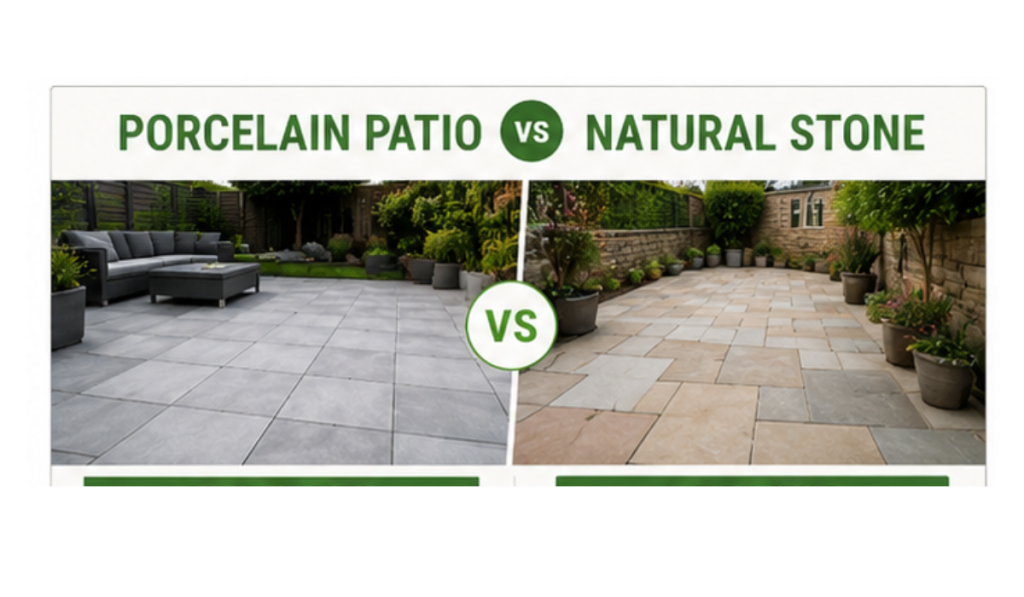
If you’re planning a new patio, one of the biggest decisions you’ll make is whether to choose porcelain paving or traditional natural stone.
Both options can completely transform an outdoor space, but they differ quite a bit in terms of:
- cost
- maintenance
- lifespan
- appearance
- installation
- long-term value
The right choice really depends on your budget, the style of garden you want, and how much maintenance you’re willing to do over time.
Here’s a realistic breakdown of how the two compare.
What is porcelain paving?
Porcelain paving is manufactured using refined clay and minerals that are heated at extremely high temperatures to create dense, durable slabs.
Most porcelain patios are designed to be:
- stain resistant
- low maintenance
- weather resistant
- highly durable
Porcelain has become increasingly popular in modern UK gardens, especially for homeowners wanting a sleek, contemporary finish.
What is natural stone paving?
Natural stone paving is made from quarried stone such as:
- sandstone
- limestone
- granite
- slate
Each slab is naturally unique, which gives stone patios a more traditional and organic appearance.
Natural stone remains extremely popular because many homeowners prefer its:
- natural variation
- texture
- character
especially in traditional or period-style gardens.
Cost comparison
One of the biggest differences between the two is installation cost.
Natural stone patio costs
Typical UK natural stone patio installation costs:
- Sandstone paving: £90–£140 per m²
- Premium natural stone: £150–£250+ per m²
Costs vary depending on:
- stone type
- slab thickness
- groundwork
- cutting requirements
Premium stone materials can become expensive on larger patio areas.
Porcelain patio costs
Porcelain patio installation usually costs:
- £120–£220+ per m²
The slabs themselves are often more expensive than standard sandstone, and installation can take longer because porcelain requires:
- precision cutting
- specialist blades
- careful levelling
However, many homeowners view porcelain as a long-term investment because of its durability and lower maintenance.
Maintenance differences
This is where porcelain patios usually perform very well.
Porcelain patio maintenance
Porcelain paving generally requires:
- occasional cleaning
- light pressure washing
- very little ongoing treatment
There’s usually:
- less staining
- less algae growth
- less colour fading
compared to many natural stone surfaces.
This makes porcelain particularly attractive for homeowners wanting a cleaner, lower-maintenance garden.
Natural stone patio maintenance
Natural stone requires more regular care over time.
Most stone patios benefit from:
- sealing
- moss treatment
- occasional pressure washing
- joint maintenance
usually every few years depending on exposure.
Without proper maintenance, natural stone can:
- fade
- absorb stains
- develop algae
- weather unevenly
especially in shaded or damp gardens.
Lifespan and durability
Porcelain patio lifespan
Good quality porcelain paving can often last:
- 20–30 years or more
depending on:
- installation quality
- sub-base preparation
- weather exposure
Porcelain is highly resistant to:
- scratching
- staining
- frost damage
when installed correctly.
Natural stone patio lifespan
Natural stone patios can also last:
- several decades
with proper installation and maintenance.
Many traditional stone patios remain in excellent condition for years because natural stone is extremely durable.
However, some softer stones can be more vulnerable to:
- weathering
- staining
- surface erosion
over time.
Appearance and style
This is often where opinions are split.
Natural stone appearance
Many homeowners still feel natural stone looks:
- warmer
- more authentic
- more characterful
Each slab contains unique:
- colour variation
- textures
- natural markings
which gives stone patios a timeless appearance.
Natural stone often works especially well with:
- cottage gardens
- traditional homes
- period properties
very well.
Porcelain patio appearance
Porcelain patios are usually chosen for their:
- sleek finish
- modern appearance
- consistent colour
They’re available in:
- contemporary greys
- stone-effect finishes
- large-format slabs
- modern textures
Porcelain often suits:
- new-build homes
- modern extensions
- minimalist garden designs
particularly well.
Safety and slip resistance
Both surfaces can become slippery in certain conditions if not maintained properly.
However:
- many porcelain slabs now include anti-slip finishes
- textured natural stone generally provides good grip naturally
Algae and moss can affect both materials, especially in shaded areas.
Slip resistance depends heavily on:
- surface finish
- maintenance
- drainage
rather than material alone.
Environmental impact
This depends heavily on sourcing and manufacturing methods.
Porcelain paving
Porcelain is manufactured using energy-intensive production methods, but its long lifespan can reduce replacement frequency over time.
Its low maintenance requirements can also reduce the use of:
- sealants
- chemicals
- ongoing treatments
Natural stone paving
Natural stone is a natural material and can be environmentally friendly when responsibly sourced.
However, imported stone can carry a higher environmental impact depending on:
- transportation
- quarrying methods
- processing
Many homeowners still prefer natural stone because of its natural appearance and longevity.
Which option adds more value?
Both options can improve:
- garden usability
- outdoor appearance
- overall property appeal
Porcelain patios are often viewed as:
- modern
- premium
- low maintenance
while natural stone appeals to buyers who prefer:
- traditional landscaping
- authentic materials
- natural character
In reality, installation quality matters more than the material itself.
A poorly installed patio — regardless of type — can quickly develop drainage and movement issues.
Which is better for families?
Porcelain patios are often preferred by families because:
- they’re easier to clean
- stain less easily
- require less maintenance
Natural stone remains popular for:
- larger gardens
- traditional homes
- homeowners wanting a softer natural appearance
Both can work extremely well when installed properly.
Final verdict
There isn’t a universal “best” option — it depends on your priorities.
Porcelain patios are usually better if:
- you want low maintenance
- you prefer a modern appearance
- you like clean lines and consistency
- you want strong stain resistance
Natural stone patios are usually better if:
- you prefer a natural appearance
- you want unique character
- you have a traditional property
- you don’t mind occasional maintenance
In This Article

Find Vetted Local Decking Installers Near you.👉