
Composite Decking vs Timber Decking
Which is better for your garden?
- Written By Jason Fisher
- 25th May 2026
- 6 min read
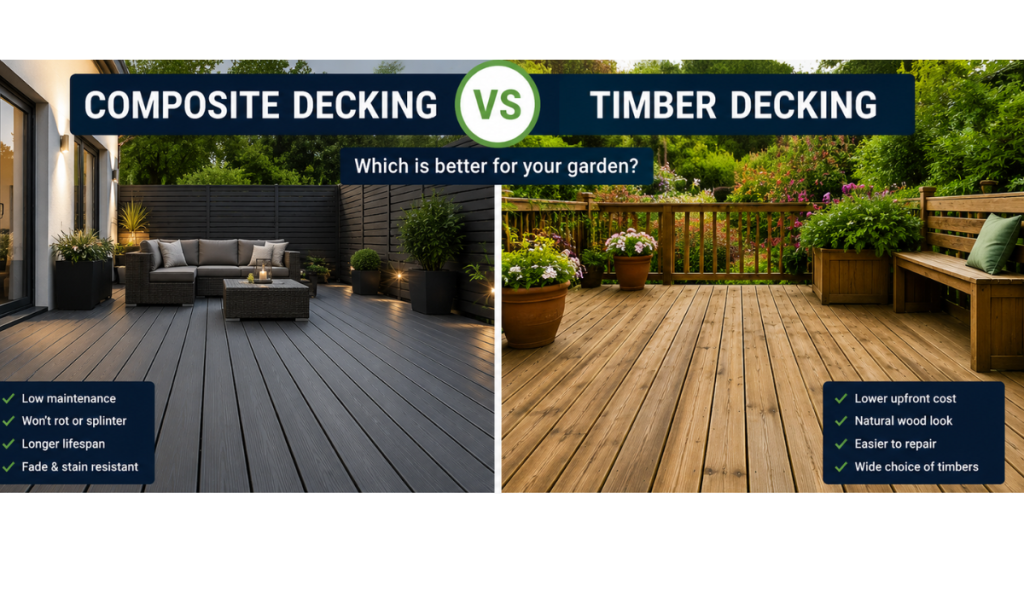
If you’re planning a new garden project, one of the biggest decisions you’ll make is whether to choose composite decking or traditional timber decking.
Both options can completely transform an outdoor space, but they differ quite a bit in terms of:
- cost
- maintenance
- lifespan
- appearance
- installation
- long-term value
The right choice really depends on your budget, how much maintenance you’re happy to do, and the style of garden you want to create.
Here’s a realistic breakdown of how the two compare.
What is composite decking?
Composite decking is made using a blend of recycled plastic and wood fibres. It’s designed to mimic the appearance of timber while reducing many of the maintenance issues that come with traditional wood decking.
Most composite boards are manufactured with:
- anti-slip finishes
- UV protection
- hidden fixings
- weather resistance
It has become increasingly popular in modern UK gardens, especially for homeowners wanting a low-maintenance outdoor space.
What is timber decking?
Timber decking is the more traditional option and is usually built using softwood or hardwood boards.
Softwood decking tends to be the cheaper option and is commonly pressure-treated to improve weather resistance. Hardwood decking costs more but generally lasts longer and provides a more premium appearance.
Timber remains popular because many homeowners prefer its:
- natural texture
- warmth
- authentic appearance
especially in traditional gardens.
Cost comparison
One of the biggest differences between the two is upfront cost.
Timber decking costs
Typical UK timber decking installation costs:
- Softwood decking: £80–£140 per m²
- Hardwood decking: £150–£250+ per m²
Softwood is considerably cheaper initially, which makes it attractive for larger gardens or tighter budgets.
Composite decking costs
Composite decking installation usually costs:
- £150–£300+ per m²
The material itself is more expensive, and installation can sometimes take slightly longer depending on the system used.
However, the long-term maintenance savings can offset some of the higher upfront costs over time.
Maintenance differences
This is where composite decking usually wins.
Composite decking maintenance
Composite boards generally require:
- occasional washing
- light cleaning
- very little ongoing treatment
There’s:
- no staining
- no sanding
- no annual sealing
for most modern composite products.
This makes it particularly appealing for busy homeowners who don’t want ongoing garden maintenance.
Timber decking maintenance
Timber decking needs much more regular care.
Most timber decks require:
- cleaning
- staining or oiling
- moss treatment
- occasional sanding
usually every 1–2 years.
Without proper maintenance, timber can:
- fade
- crack
- warp
- become slippery
especially in damp UK weather conditions.
Lifespan and durability
Composite decking lifespan
Good quality composite decking can often last:
- 20–30 years or more
depending on:
- installation quality
- product grade
- exposure to sunlight and moisture
Composite boards are also less likely to:
- rot
- splinter
- attract insects
compared to timber.
Timber decking lifespan
Softwood decking usually lasts:
- around 10–15 years
with good maintenance.
Hardwood decking can last significantly longer but requires a much larger initial investment.
Poor maintenance dramatically reduces timber lifespan.
Appearance and style
This is one area where opinions are split.
Timber decking appearance
Many homeowners still feel timber looks:
- warmer
- more natural
- more traditional
Real wood grain and natural ageing appeal to people wanting a softer garden appearance.
Timber often works especially well in:
- cottage gardens
- period homes
- traditional landscaping designs
Composite decking appearance
Older composite decking products sometimes looked artificial, but modern systems have improved massively.
Premium composite decking now comes in:
- textured finishes
- realistic wood grain patterns
- multiple colours
- hidden fixing systems
Composite often suits:
- modern gardens
- contemporary extensions
- low-maintenance outdoor spaces
very well.
Safety and slip resistance
Both options can become slippery if poorly maintained.
However, many composite systems now include:
- anti-slip textures
- improved grip surfaces
which can make them safer in wet conditions.
Timber decking can become slippery over time due to:
- algae
- moss
- weathering
especially in shaded gardens.
Environmental impact
This depends heavily on the materials used.
Composite decking
Many composite products use:
- recycled plastics
- reclaimed wood fibres
which can reduce waste.
However, they are still partly plastic-based products.
Timber decking
Responsibly sourced timber can be environmentally friendly, especially if certified by organisations such as FSC.
Timber is also biodegradable, unlike composite products.
Which option adds more value?
Both can improve:
- garden usability
- appearance
- overall property appeal
Composite decking is often viewed as:
- more premium
- lower maintenance
- modern
while timber appeals to buyers who prefer traditional landscaping.
In reality, installation quality matters more than the material itself.
A poorly installed deck — regardless of type — can hurt appearance and create maintenance problems later.
Which is better for families?
Composite decking is often preferred by families because:
- it splinters less
- requires less maintenance
- is easier to clean
It’s particularly popular for:
- outdoor dining spaces
- entertaining areas
- modern family gardens
Final verdict
There isn’t a universal “best” option — it depends on your priorities.
Composite decking is usually better if:
- you want low maintenance
- you prefer modern garden design
- you plan to stay in the property long term
- you want longer lifespan with less upkeep
Timber decking is usually better if:
- you prefer a natural appearance
- you have a tighter budget
- you don’t mind regular maintenance
- you want a more traditional garden feel
In This Article

Find Vetted Local Decking Installers Near you.👉