
Artificial Grass vs Real Grass
Which Is Better for Your Garden?
- Written By Jason Fisher
- 25th May 2026
- 6 min read
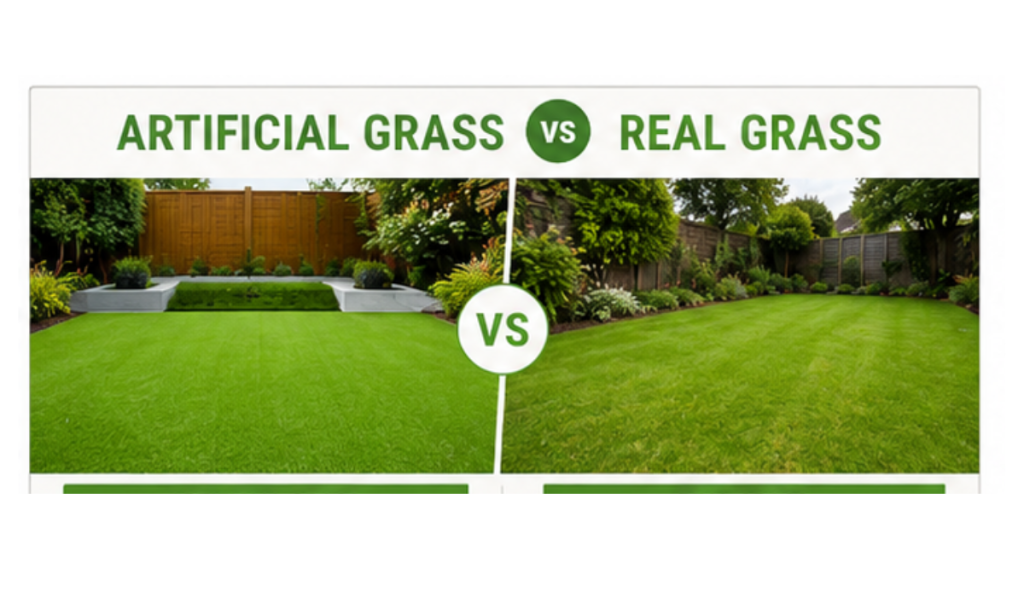
If you’re planning a garden renovation, one of the biggest decisions you’ll make is whether to choose artificial grass or traditional natural grass.
Both options can completely transform an outdoor space, but they differ quite a bit in terms of:
- cost
- maintenance
- lifespan
- appearance
- installation
- long-term value
The right choice really depends on your lifestyle, budget, and how you want to use your garden throughout the year.
Here’s a realistic breakdown of how the two compare.
What is artificial grass?
Artificial grass is a synthetic surface made from plastic fibres designed to replicate the appearance of natural grass.
Modern artificial lawns are manufactured with:
- UV resistance
- drainage backing
- realistic textures
- multiple colour tones
Artificial grass has become increasingly popular in UK gardens, especially for homeowners wanting a low-maintenance outdoor space that looks tidy all year round.
What is real grass?
Real grass is a natural lawn grown from seed or turf and remains the traditional choice for most UK gardens.
Natural lawns provide:
- biodiversity
- softer natural textures
- cooling properties
- environmental benefits
Real grass remains extremely popular because many homeowners prefer its:
- natural feel
- authentic appearance
- seasonal character
especially in family gardens and larger outdoor spaces.
Cost comparison
One of the biggest differences between the two is upfront installation cost.
Real grass costs
Typical UK natural lawn installation costs:
- Turf installation: £12–£25 per m²
- Seeding: £5–£15 per m²
Natural grass is significantly cheaper initially, making it attractive for larger gardens and lower budgets.
However, long-term maintenance costs can add up over time.
Artificial grass costs
Artificial grass installation usually costs:
- £60–£120+ per m²
Premium products can cost considerably more depending on:
- pile height
- realism
- drainage systems
- groundwork requirements
Proper installation is essential because poor sub-base preparation can lead to uneven surfaces and drainage issues later.
Maintenance differences
Artificial lawns generally require:
- occasional brushing
- light cleaning
- leaf removal
There’s usually:
- no mowing
- no watering
- no fertilising
- no mud patches
for most modern installations.
This makes artificial grass particularly attractive for busy homeowners wanting a cleaner, lower-maintenance garden.
Real grass maintenance
Real lawns require much more regular care throughout the year.
Most natural lawns need:
- mowing
- watering
- feeding
- weed treatment
- seasonal repairs
especially during:
- summer droughts
- wet winters
- heavy garden use
Without maintenance, real grass can:
- become patchy
- develop weeds
- turn muddy
- suffer wear from pets and children
particularly in high-traffic gardens.
Lifespan and durability
Artificial grass lifespan
Good quality artificial grass can often last:
- 10–20 years
depending on:
- product quality
- usage levels
- installation quality
- sun exposure
Premium artificial lawns are designed to resist:
- fading
- flattening
- heavy wear
when properly maintained.
Real grass lifespan
Natural lawns can last indefinitely with proper care and regular maintenance.
However, real grass is much more vulnerable to:
- weather conditions
- foot traffic
- pets
- drainage issues
Damaged lawns often require:
- reseeding
- returfing
- patch repairs
to maintain appearance over time.
Appearance and style
This is often where opinions are divided.
Real grass appearance
Many homeowners still feel real grass looks:
- more natural
- softer
- more attractive overall
Natural lawns change with the seasons and create a more organic garden appearance.
Real grass often works especially well with:
- traditional gardens
- cottage-style landscaping
- larger outdoor spaces
very well.
Artificial grass appearance
Older artificial grass products sometimes looked obviously fake, but modern systems have improved massively.
Premium artificial lawns now come in:
- realistic mixed fibres
- multiple green tones
- natural-looking textures
- softer finishes
Artificial grass often suits:
- modern gardens
- small urban spaces
- low-maintenance landscaping
particularly well.
Safety and slip resistance
Both surfaces can work well when installed correctly.
However:
- artificial grass usually drains very efficiently
- real grass can become muddy during wet weather
Artificial grass is often chosen for:
- children’s play areas
- pet-friendly gardens
- heavily used spaces
because it remains usable throughout the year.
Real grass can become slippery and waterlogged in poor drainage conditions, especially during UK winters.
Environmental impact
This is one of the biggest talking points between the two options.
Artificial grass
Artificial grass reduces:
- water usage
- fertilisers
- mowing emissions
However, it is still a plastic-based product and does not provide the same biodiversity benefits as natural lawns.
It can also become hotter during summer months compared to real grass.
Real grass
Natural grass provides:
- wildlife support
- natural cooling
- carbon absorption
- improved biodiversity
Real lawns are generally considered more environmentally friendly when properly maintained.
However, maintaining natural lawns may require:
- watering
- fertilisers
- fuel-powered mowing
depending on the size of the garden.
Which option adds more value?
Both options can improve:
- garden usability
- outdoor appearance
- property appeal
Artificial grass is often viewed as:
- low maintenance
- family friendly
- practical
while real grass appeals to buyers who prefer:
- natural gardens
- traditional landscaping
- environmentally friendly outdoor spaces
In reality, overall garden design matters more than the lawn type itself.
A well-designed garden with either option can significantly improve kerb appeal and usability.
Which is better for families?
Artificial grass is often preferred by families because:
- it stays cleaner year round
- it handles heavy use better
- it reduces mud and mess
It’s particularly popular for:
- children’s play areas
- pet owners
- busy households
Real grass remains popular for:
- larger family gardens
- homeowners wanting a softer natural feel
- environmentally conscious households
Final verdict
There isn’t a universal “best” option — it depends on your priorities.
Artificial grass is usually better if:
- you want low maintenance
- you have children or pets
- you want year-round appearance
- you dislike mowing and upkeep
Real grass is usually better if:
- you prefer a natural appearance
- you want better environmental benefits
- you enjoy gardening
- you don’t mind regular maintenance
In This Article

Find Vetted Local Decking Installers Near you.👉